Listening 2: October sounds
Historically, October has been one of my favored times of the year. It becomes cool enough to layer without bundling. I can trade iced coffee for the cheaper drip option. As soon as the first seasonal chill is felt in the morning air I listen to Van Morrison's Astral Weeks. Maybe it's Pavlovian. Autumn arrives and I hear that shaker at the album's start followed by the strumming of a guitar, the arrangement of strings and a flute beckoning like the Pied Piper. Critic Lester Bangs described it as a "mystical document" and that "[i]t sounded like the man who made Astral Weeks was in pain." He meant that you intuit the pain because lyrically it offers little clue. Morrison's words feel conjured rather than planned. Songs stretch and meander as if Morrison is content with aimless journeying as he searches for conclusion. It's this transitory quality that speaks most of fall. Not yet to frozen stationary winter though no longer in the buoyant light of summer. It's not surprising then that, as Morrison was undergoing his own crisis, Astral Weeks was recorded in September and October of 1968
Near September's end we experience the autumn equinox in the Western hemisphere. From our position on Earth the Sun appears to move across the portion of the sky delegated to the astrological sign of Libra. Colloquially known as"Libra season," the period lasts for the majority of October before the Sun moves into the sign of Scorpio. Ruled by Venus, Libra's style is to connect though sometimes by skirting friction and incongruities that must be reconciled for union. Libra craves balance and will bend itself to achieve a lightness and symmetry in relational matters and beauty. Whereas Scorpio plunges into depths, swimming into corners where light recedes. Scorpio fixes itself, only moving to dig deeper into crevices to excavate what is often hidden in the dark—shame, neurotic obsession, control, and violence but also power, grief, and (per astrologer Demetra George) sorcery. As the Sun and neighboring planets appear to make their way through Scorpio we celebrate Halloween, the Day of the Dead, Samhain. People often talk of the "the veil" being thin, gesturing toward a collapse between not just the living and the dead but logic and intuition.
A friend recently told me that I tend to lose my mind in October. It was said not in judgment but in consolation. It is true. The month can be seen as a the start of the year's end. Old pains may surface with a new face. Anticipation morphs to anxiety. The light wanes. But there is an opportunity to breathe and to move into rather than against stillness. Much of the music I've been listening to lately showcase these autumn attributes. Below is a non-exhaustive sampling.
ALBUMS
Spirit In the Dark, 1970
Aretha Franklin
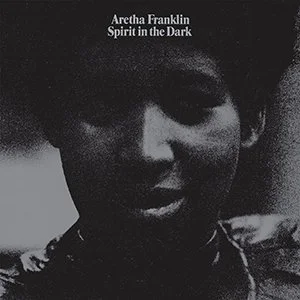
I recently wrote about the connections between the late great divas Dolly Parton, Whitney Houston, and Aretha Franklin. As with any music essay, I listened to copious amounts of their songs to familiarize myself with the totality of their discographies. Of the many stand-outs was 1970's Spirit in the Dark, an eclectic album comprised of Aretha's standard output of energized covers and original music (five of the twelve tracks were written by Franklin herself). After the pop success of I Ain't Never Loved A Man The Way I Loved You and Lady Soul the record shows Aretha fully at home in her gospel and blues roots. Spirit employs a cast of savvy collaborators including Duane Allman on guitar for "When the Battle is Over." Album highlights include opener "Don't Play that Song," a piano-forward ballad that recalls Sam Cooke's cover of "Frankie & Johnny" and the uplifting gospel title track.
Track highlights: "Don't Play that Song;" "Spirit in the Sky;" "Pullin"
Here Comes the Sun, 2026
Chat Pile

The world is burning. The world is on fire. The world is ending. You know, with everything going on in the world right now…gestures broadly.
The general consensus I've found from offhand comments like the above which I've heard in conversations or read as asides in articles under Arts + Culture tabs, is that life right now is uniquely bad for most everyone. It's a sentiment that I can't object given the confluence of atrocities in recent years: the Palestinian genocide, the rising price to survive often attributed to "inflation" though I wonder if it could be simplified as greed (businesses charge more for less and worse because they can), proliferation of far-right fascist governments including the United States' own Trump Administration, the amplification of Content which is, in part, a result of Big Tech companies that have now funneled billions into resource-draining and mind-numbing generative AI, the global pandemic that ushered much of this in, and many many more horrors.
Yet, often whenever I hear a retread of the "world ending in fire and brimstone" creed I think of Franny Choi's 2019 poem, "The World Keeps on Ending, and the World Goes On."
“By the time the apocalypse began, the world had already
ended. It ended every day for a century or two. It ended, and another ending world spun in its place.”
The world is now ending but for whom? And from what vantage point do you stand? Are you overlooking the wreckage, at the foot of the trash mound, in the muck of shit? For the long overlooked, disenfranchised, and poor, the world is at a constant halt.
Since 2019 Oklahoma City natives Chat Pile—whose name is taken from the mounds of toxic waste that surround mining cities—have shed light on the depravity of modern social alienation and stratification. Over the course of a slew of EPs and four records, the band have dissected the world's so-called yet unrelenting end with their rageful sludge-rock.
"Why do people have to live outside?" singer Raygun Busch's asks then screams on "Why" from their 2022 debut God's Country. Busch paints the cruelty of people living on the streets despite a bounty of resources that could prevent it over a barrage of clamoring drums and heavy guitars, daring listeners to remain nonchalant in the face of the song's boiling indignation.
Here Comes the Sun, continues the thematic through-line of previous efforts such as the brutal disaffection of social media scrolling through tragedy ("Influence"). The dissociation and psychological torment of "Deep Blue" recalls earlier songs, "Masks," "The Masks," and "Masc." But on Here Comes the Sun, Chat Pile scales back their noise-rock elements in favor of a more euphonious and, at times, post-rock style. The result isn't a loss of their frenetic energy but a tightening of sound and softer edge. This change is most pronounced on album standout and closer "October All Time."
"Everything will be fine / the sun will continue to shine." With a hint of optimism the song reminds, that as this world falls away something must be built in its place.
Track highlights: "Intruder;" "PEN I S MALL;" "October All the Time"
Popstar, 2026
Tinashe

Like many people, my understanding of Tinashe's brilliance was belated. And like even more people I have been in the practice of uplifting the singer after the release of her eighth album, Popstar. An unstudied ear could assume that Tinashe is following pop trends with club and dance music made friendly for streaming waves. In actuality, its her influence that can be heard on recent and popular artists including PinkPantheress, Charli XCX, and Addison Rae. With Popstar, Tinashe announces her rightful claim to the title. She's discussed the issue of being marketed solely as R&B, owing to the racial history of the genre marker that often silos black artists. It's an ironic predicament since the "pop" distinction owes its foundations to rock and R&B, pioneered by black musicians. Much can be (and has been) said about the marginalization that black artists—women especially—endure as they wait for the world to catch up. Right now it may suffice to just dance and say "thank you Tinashe for your patience."
Track highlights: "Sunglasses;" "Cloud 9;" "Flashbacks."
Offering, 2026
Ibeyi
My mother once recounted a time in her childhood when she prayed to God for long hair. She prayed with all her might, knowing the transformative power of the Lord could overcome things like biology and genetics. She awoke the next day with no notable changes to her coils. The moment, she said, ruptured her faith. While she wouldn't renounce a belief in God she admits that it was never quite the same. When I heard the story as a kid, then also a believer in Christ, I understood. I could recall the prayers I'd elevated that had went unanswered. A prayer is similar to an incantation. Both are attempts to exert a will with assistance from a force outside of oneself be it a deity, a saint, a cluster of trees, or the ocean.
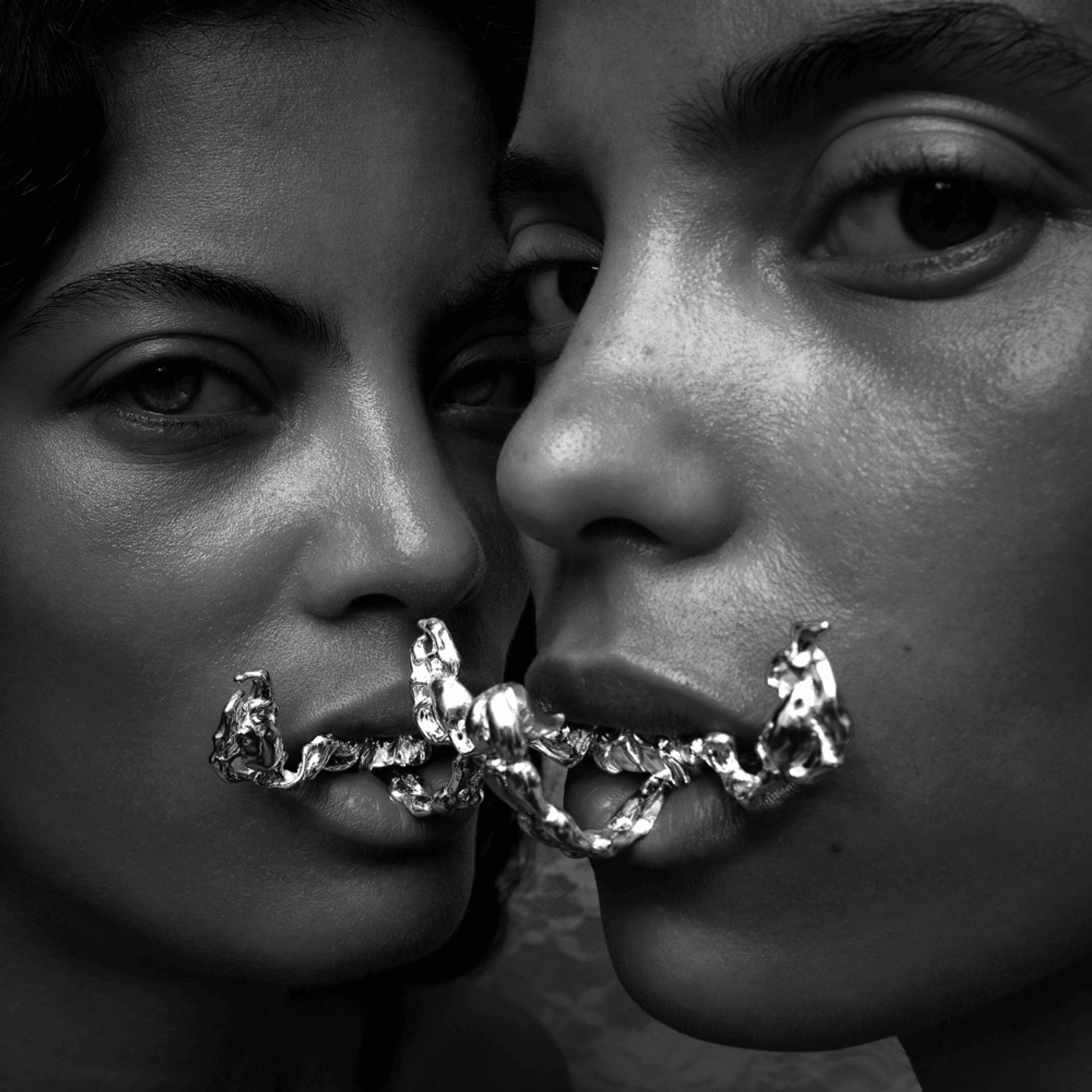
"I don't make spells anymore, now I make offerings," sisters Naomi and Lisa-Kaindé Diaz declare on the eponymous track of their fourth album as the duo Ibeyi (the Yoruba word for twins). As the daughters of Buena Social Vista Club member Miguel "Angá" Díaz and singer Maya Dagino, music performance seemed their destiny. Beginning with their 2015 self-titled debut, Ibeyi have released R&B records anchored with Cuban percussion (in the lineage of their father, Naomi learned and plays the cajón). Lyrics are sung in French, English, Spanish and Yoruba. The latter arrives in relation to the religious systems of Yoruba, a West African tradition and Santería, which arose in Cuba and delineated from Yoruba. On Ibeyi, the orishas Oya and Oshun are evoked as is Okolun on Offerings. Many of Ibeyi's songs, such as "River" from their debut, contain prayers that lend an affective ethereal quality. But with previous album Spell 31 (2022), I began to wonder if the sister-singer-musicians were hemmed in by the expectations of spiritual posturing and witchery.
On Offering Ibeyi are at their most intimate. Previous albums explored the grief and loss of their father and older sister. Now we hear them also grieving the losses of their own identities as they grapple with self-doubt and a fear of change. While on "Made of Gold" (Spell 31) they declared victory over enemies who challenged their magic, with songs like "Focus" they give themselves over to humility of uncertainty. Naomi and Lisa-Kaindé have learned "they can't manifest for shit" and instead of an exertion of will they give themselves over in offering. Which is not to say the duo's usual sense of celestial confidence is absent (look to the propulsive "Moshpit") but more encompassing of its human totality that includes stretches of questioning and insecurity.
Track highlights: "Moshpit;" "Offerings;" "I Know You Loved Me;" "Baba"
TRACKS
“On Your Mind,” 2026
FKA Twigs ft. Lil Yachty
FKA Twigs' EUSEXUA (2025) wasn't my favorite of her albums but I could commend the evolution that began with the sublime Caprisongs. That mixtape saw the singer breaking away as a cornerstone of indie sad-girl music—a fan cultivated image. Often praised for her experimentation, on Caprisongs Twigs explored the contours of joy through Caribbean-influenced beats ("jealousy") and yearning R&B melodies ("careless" featuring the once softly-cancelled Daniel Caesar).
"On Your Mind" continues the trip hop rhythms presented on EUSEXUA and EUSEXUA Afterglow with production from collaborators DJH, Mannie Dee and Jonny Leslie and a welcomed feature from rapper Lil Yachty. The song opens with an empyreal sound over which Yachty laments his long lost of faith in Jesus. "Why would he give me a heart to break into pieces?" As if in response to his anguished question, the track transitions to an uptempo bumping beat I find impossible not to move to even while sitting.
"Is it heavy in your heart? Why won't you start dancing? Is there something on your mind?" FKA Twigs sings in the chorus. Wry and care-free, "On Your Mind" offers rational advice in this Atlanta-London conjoining. Maybe you couldn't stop the clouds from rolling in, subsuming you in dejection. But what if you danced, letting the feeling move through you instead of settling in your chest?
“Atlantic City,” 1992
The Band
On Thanksgiving Day, 1976, the Band held their Last Waltz in San Francisco at the Winterland Ballroom. Their purported final concert, performed with a slew of stars—Bob Dylan, Joni Mitchell, Muddy Waters, Neil Young, and Van Morrison were among the numerous accompanying artists—and filmed by Martin Scorsese, was touted as a permanent farewell. In Scorsese's film The Last Waltz, guitarist-songwriter Robbie Robertson and assumed Band leader paints the end as a natural culmination after near nonstop touring and record writing. However, in the early eighties the Band began touring once more sans Robertson. Multi-musician and singer Levon Helm accused Robertson of orchestrating the breakup against his desires and the rest of their bandmates (Rick Danko, Richard Manuel, and Garth Hudson). Helm would also eventually accuse Robertson of controlling an unfair share of songwriting credits and thus royalties. For his part, Robertson held to his position, maintaining that their initial run as the Band had come to its natural yet celebratory conclusion. Later , he described the strain of leading a group of men who were all largely dependent on drugs and alcohol. The two never reconciled.
Released in 1992, Jericho was the Band's first studio album without Robertson or pianist Richard Manuel who died by suicide in 1984. (With the exception of "Country Boy" recorded before his death.) A constellation of material created by Danko, Hudson, and Levon with new writers and musicians, the record asserted the Band's endurance despite Robertson's non-involvement. In between gems like "The Caves of Jericho" and "Amazon (River of Dreams), the album's star happens to be a cover: Bruce Springsteen's 1982 song "Atlantic City."
Nebraska, on which "Atlantic City" originally appeared, is a sparse album of acoustic recordings, Springsteen is accompanied only his guitar and harmonica in a reminder of why he was initially marketed as the next Dylan. The disquieting folk tunes are fitting for narratives documenting the crumbling illusions of Americana. Springsteen's vocals echo like a voice in a desolate factory as the narrator sings about his corrupted and disorderly town that presents little opportunity.
I counted ten people onstage during the Band's 1994 Late Night appearance where they played their reimagining of "Atlantic City." Their cover arranges the song a for multi-piece outfit adding percussion that didn't gel for Springsteen. The most transformative aspects are Helm's mandolin playing that takes up the place of the lead guitar and the addition of Hudson's accordion riffing in the spaces that were occupied by a harmonica. While Springsteen's solitary voice conveys the lonesome melancholy of his narrator, the full band and harmony around Helm's soulful grovel gives off an impression of collective struggling. Where Springsteen's song fades in ghostly echoes and melody, the Band marches on that makes it feel like spiritual successor to the Band's 1969 "The Night They Drove Ol' Dixie Down."
"Everything dies, baby, that's a fact / But maybe everything that dies some day comes back." The sentiment is not exactly hopeful as it is passive wishing. The dead don't return. Resentments that root themselves in foundations of once loving relationships can lead to rotting decay. Like a city left to fend for itself in the wake of a environmental disaster or after a major industry employing and powering a town retreats. Resolution, as was the case for Helm and Robertson, is not always found at least not by way of happy ending. Regrets may run abound and yet as long as there is breath coursing through one's lungs, perhaps there is a dream, however small, worth holding.